A Calm Bedtime Routine for Kids Who Fight Sleep
A calm, age-by-age bedtime routine for kids 4 to 14 who won't sleep, with exact phrases, step-by-step scripts, and small changes you can start tonight.
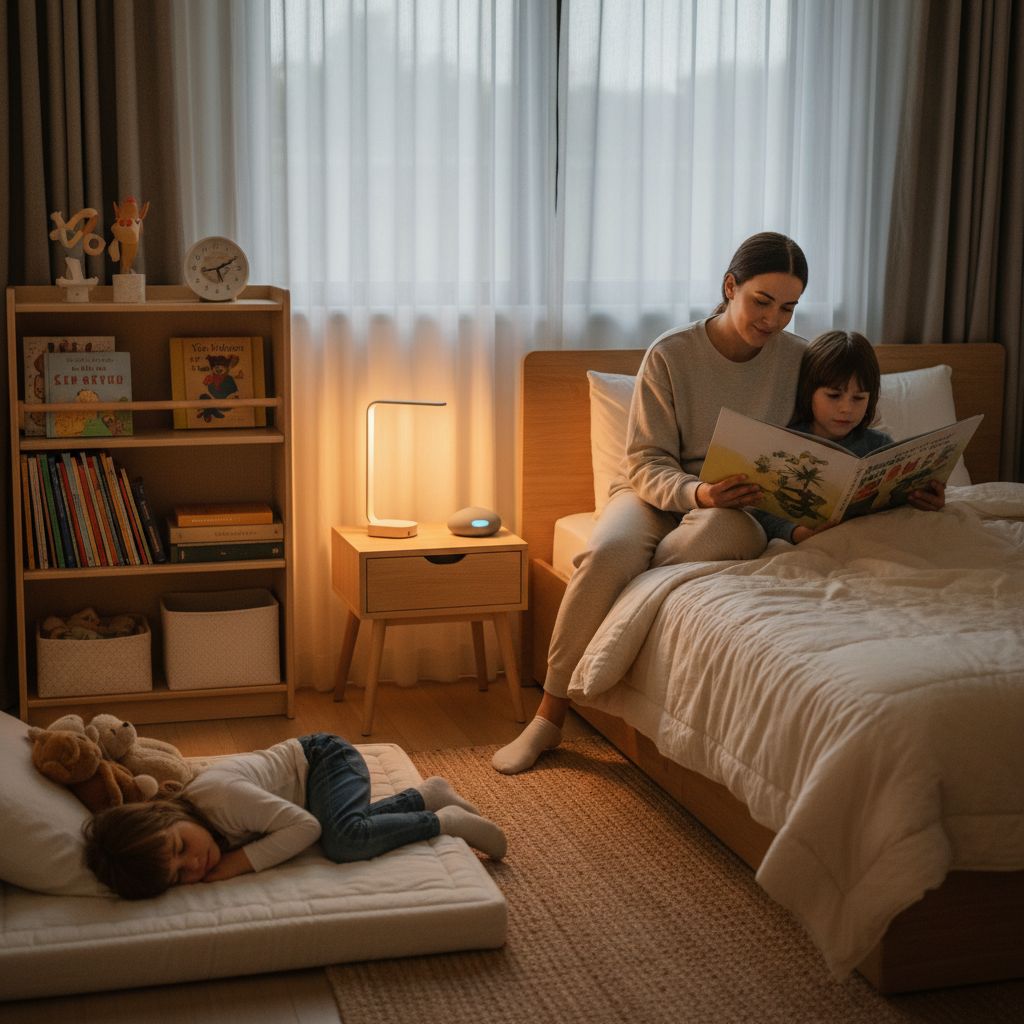
It's 9pm. Teeth brushed, pajamas on, lights low. You've just closed the door when a small voice floats down the hall: "I'm thirsty." Then: "There's something in the closet." Then come the real fireworks, tears, a slammed foot, a child who was yawning ten minutes ago and is now wide awake and furious. If you've been Googling for a bedtime routine for kids who won't sleep, you are very much not alone.
You're tired. You're out of ideas. And you've already read three books.
Here's what you'll get below: a calm, repeatable routine that quietly lowers the nightly standoff. Exact phrases to say (and skip), step-by-step scripts, and age-specific tweaks for kids 4 through 14, because a 5-year-old and a 12-year-old need very different things at 9pm. You can start tonight.
Why some kids fight sleep (and why it is not defiance)
Before we fix the routine, it helps to understand what's actually going on. Sleep is a big ask. You're telling a child to stop moving, stop thinking, stop checking in with you, and hand over control to the dark. For kids with big feelings, anxiety, ADHD traits, or sensory sensitivities, that handover is genuinely hard. Their nervous systems are still revved. Letting go feels unsafe, not boring.
So what's actually driving the fight? Usually a mix of these:

- Too much stimulation in the last hour (rough play, loud music, bright lights)
- Hunger or a blood sugar dip from a light dinner
- Worries that only surface when the room goes quiet
- Screens too close to bedtime
- Bedtimes that shift by 30 or 60 minutes night to night
- Separation, missing you, or missing the day they didn't want to end
Here's the reframe that changes everything. Resistance usually isn't your child trying to win. It's a nervous system that hasn't downshifted yet. They're not plotting. They're flooded.
And that's why a stricter rule rarely works. Threats raise the alarm. What actually helps is predictability and a slow slide into sleep, the same cues, in the same order, at roughly the same time, every night. Boring on purpose. Boring is the point.
Start the wind down earlier than you think
Once you accept that bedtime battles are nervous-system problems, the next shift is about timing. Bedtime isn't a moment, it's a runway. Start the wind down 45 to 60 minutes before lights out, not when you want them asleep. If you aim for 8pm, the slowing begins around 7:15.
What does slowing actually look like? Dim the lamps. Turn off the big overhead light. Drop your voice half a notch. Stop asking rapid-fire questions about homework or tomorrow. The whole house downshifts, and kids feel it in their bodies before they understand it in their heads.
Screens off at the start of the wind down wherever you can manage it. And always with a warning, because yanking a tablet mid-video guarantees a meltdown. Try this exact phrase: "In ten minutes we start cosy time. I will come and tell you when." Then follow through. The predictability is the whole point.

How much your child owns this depends on age:
- 4 to 7: You lead the transition. They can't track time yet, so you're the clock.
- 8 to 11: They can set a timer themselves. Hand over the phone or kitchen timer and let them call it.
- 12 to 14: Negotiate the start time together and let them own it. Your job shifts from enforcer to backup.
Build a short, same-every-night sequence
With the runway in place, the actual steps on it should feel almost suspiciously simple. Kids sleep better when their brains know what's coming. A short kids bedtime routine (the same four to six steps, in the same order, every single night) teaches the body to wind down on cue. You're not drilling them. You're building a pattern they can follow half-asleep.
Here's a sequence that works for most families:
- Snack
- Bath or wash
- Pyjamas
- Teeth
- Story or chat
- Lights low
Keep it short. Really short. The test isn't whether it works on an easy Tuesday, it's whether you can still do the whole thing on a hard night, when someone's crying about homework and the dog just threw up. If your sequence collapses under pressure, trim a step.
When things wobble, name the pattern out loud. Try this exact phrase: "Same steps as always. First teeth, then story, then lights low." It cues the child and settles you at the same time.
Adjust the format by age:
- Ages 4 to 7: a picture checklist on the wall. They love ticking off a bear with a toothbrush.
- Ages 8 to 11: their own written list, ticked off solo.
- Ages 12 to 14: skip the chart. A shared understanding between you works better than anything stuck to the fridge.
Handle the stalling, the worries and the one more thing
Even the best sequence will hit speed bumps, and most of them arrive in the last five minutes. You know what's coming. The water request. The sudden toilet trip. The question about volcanoes. And then, right as you reach the door, the big one: "What happens when people die?" Bedtime stalling isn't bad behaviour. It's a kid who doesn't want the day to end, or a brain that only slows down enough at night to notice the worries it ignored all day.
Plan for it. Build one "extra" into the routine so it's not a battle every night. One extra cuddle. One more question. One last sip. When the extra is expected, you don't have to argue about whether to give it.
For the big worries, try name and park: "That sounds important. Let's write it on the worry list and talk about it at breakfast." You're not dismissing the feeling. You're giving it a safe place to wait.
Short phrases work better than reasoning at 9pm. Pick one and repeat it kindly:
- Ages 4 to 7: "Your body is safe. I am right here. One more cuddle, then eyes closed."
- Ages 8 to 11: "Your brain is busy tonight. Let's do three slow breaths together."
- Ages 12 to 14: "You don't have to sleep yet, you just have to rest. Phone stays in the kitchen."
Hold the limit, but hold it warmly. If they push back, don't negotiate or explain again. Just repeat the same short phrase. Arguing wakes everyone up. Calm repetition tells their nervous system that nothing scary is happening here, the answer is simply the answer.
Protect the room, the body and the morning
Scripts and sequences do a lot of work, but they land better when the wider conditions are right too. Think of sleep in three parts. The room, the body, and the morning after. Each one carries its own weight.
Start with the room. Cool, dark, and quiet does most of the work. A soft nightlight is absolutely fine if it helps your child settle, plenty of kids sleep better with a warm glow than in pitch black. Watch the afternoon too. Caffeine hides in fizzy drinks, iced teas, and chocolate, and little bodies are more sensitive to it than ours.
Daylight and movement earlier in the day matter more than most parents realise. A walk to school, kicking a ball at lunchtime, playing in the garden after school, these all help the body feel properly sleepy by bedtime.
Then there's the morning. A steady wake up time, even at weekends, is one of the strongest supports for falling asleep at night. A lie-in on Saturday can push bedtime later for days.
And give it time. Notice patterns over a week or two, not one bad night. What helped on the good nights is often more telling than picking apart the hard ones. A short daily check-in (something like Littlemind works well) makes those patterns easier to spot, and easier to share with a GP or therapist if you ever need to.
When to talk to a professional
Most bedtime battles ease with time and small tweaks. But some signs are worth a proper conversation with someone trained to help.
Consider reaching out if you notice:
- Sleep problems that drag on for several weeks and start affecting school, mood or safety
- Loud snoring, pauses in breathing, or very restless sleep night after night
- Frequent night terrors that leave you both shaken
- Anxiety so big your child can't settle, even with your steady support
- Your own exhaustion tipping into "I can't cope"
Start with your child's pediatrician or GP. They can rule out physical causes and refer you on if needed. A child psychologist is a good next step for the emotional side. For trustworthy general reading, the American Academy of Pediatrics, the NHS and the Child Mind Institute are all solid places to land.
Bring a short sleep log too, bedtimes, wake times, what helped, what didn't, across a week or two. It makes the appointment far more useful.
And remember: asking for help is a strong, kind parenting move. Not a last resort.
A gentler bedtime starts tonight
You don't need to overhaul everything to help your child sleep. Pick one small change for tonight, dim the lights 20 minutes earlier, start the bath before dinner wind-down, or put the tablet in a kitchen drawer at 7pm, and watch what happens over the next week.
Measure progress gently. Fewer tears. A standoff that lasts five minutes instead of twenty. Lights out at 8:45 instead of 9:15. That's a win.
If you'd like a little help spotting what's really behind the hard nights (and the easier ones), a 30-second daily check-in in Littlemind can quietly surface the patterns, so you can do more of what works, and share clear notes with a professional if you ever need to. Start small tonight. Breathe. Try again tomorrow.
See what is behind the good and hard days
Littlemind is a 30-second daily check-in for parents of kids aged 4 to 14. Over a few days, gentle AI insights show you patterns in mood, sleep and behaviour, and what helps.