ADHD Morning Routine for Kids: What Actually Works
A calmer ADHD morning routine for kids aged 4 to 14, with exact phrases, visual tools, and small age-matched shifts you can set up tonight.
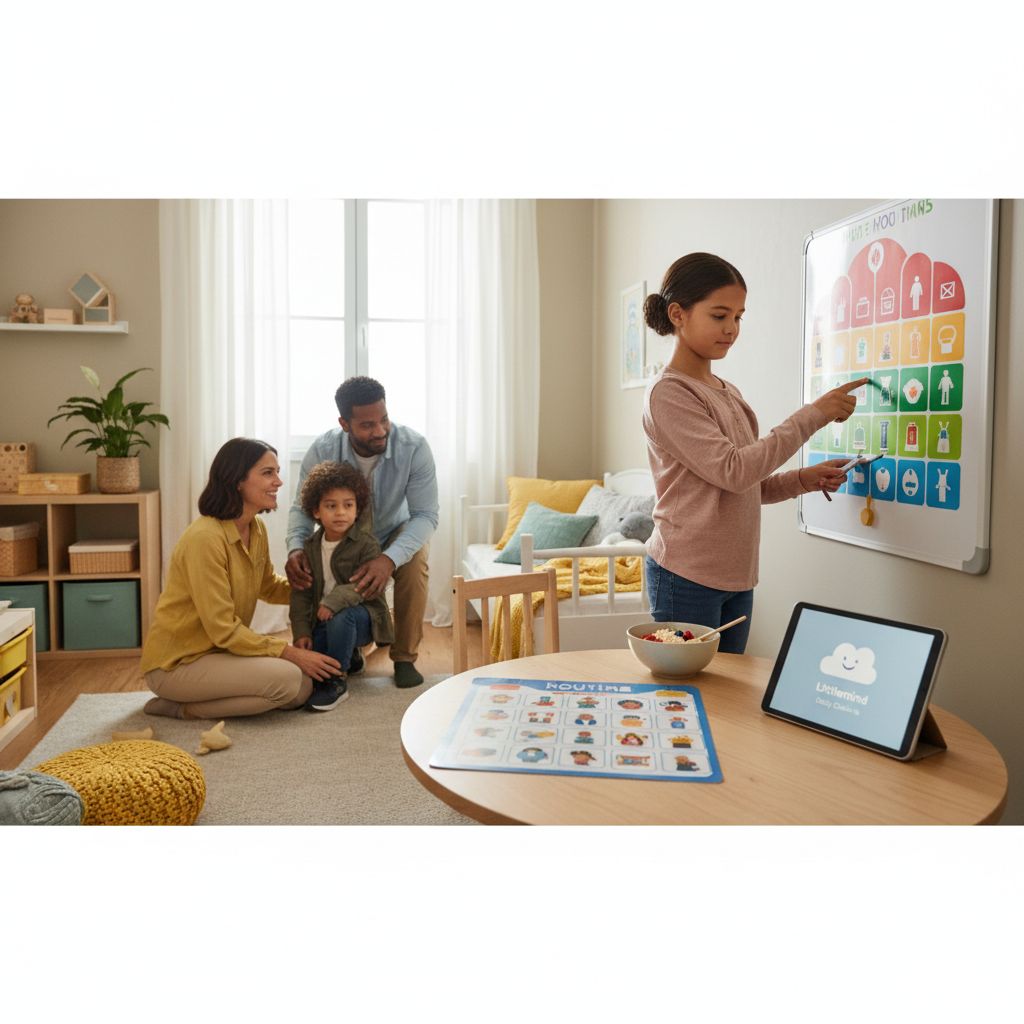
It's 7:48am. One shoe is missing (probably under the sofa, possibly in the garden). The toast you made at 7:20 is a cold rectangle on the counter. Your child is still in pyjamas, sprawled on the floor, inexplicably reading a book about sharks. You're already late. Again.
If any of that sounds painfully familiar, this guide is for you. Building an ADHD morning routine for kids aged 4 to 14 doesn't require a new app, a laminator, or a Pinterest overhaul. It just requires a handful of small, concrete shifts you can set up tonight.
Below you'll find the exact phrases, visual tools, and age-matched tweaks that tend to actually work, plus what to do when the morning falls apart anyway (because sometimes it will). The goal isn't perfection. It's a softer start, for both of you.
Why mornings are so hard for kids with ADHD
Before we get to the fixes, it helps to understand why mornings feel uniquely brutal in the first place.
ADHD brains often find transitions genuinely hard. Switching from one activity to another, sensing how much time has passed, and simply getting started on a task can all take real effort. That's not laziness, and it's not defiance.

So this isn't about being a stricter parent or adding more consequences. It's about removing friction so mornings stop feeling like a battle neither of you wanted to fight.
Start the morning the night before
The single biggest shift in any morning routine ADHD child strategy happens the night before.
Mornings go sideways because tired brains hate decisions. Every choice (what to wear, what to eat, where's the library book) burns energy you don't have at 7:14am with a half-dressed seven-year-old and a toaster that just popped. Shift those decisions to the night before and you remove the friction before it starts.
Pick one spot by the door. A chair, a hook, a basket, doesn't matter. Everything lands there the night before: clothes, bag, shoes, and the breakfast choice (even just a sticky note saying "oats" works). Then do a five-minute "tomorrow check" together.

Use this exact phrase to kick it off: "Let's do our two minute set up so morning you has it easy." Kids respond to the idea of helping their future self. It's weirdly motivating.
Match the routine to the age:
- Ages 4 to 7: You offer two outfits. They pick one. That's it, choice without overwhelm.
- Ages 8 to 11: They pack the bag themselves using a simple written checklist taped inside the lid or on the wall.
- Ages 12 to 14: They own the whole routine. You're backup, not the manager. Ask once, then step back.
Done nightly, this takes under five minutes and buys you a calmer morning every single day.
Build a visual routine your child can actually follow
Once the night-before prep is in place, the next piece is making the morning itself visible.
Spoken instructions have a short shelf life for ADHD kids. By the time you've said "put your shoes on, grab your bag, and brush your teeth," the first instruction has already evaporated. Working memory just can't hold all that at once. Visuals, though? They stick around. A list on the wall doesn't disappear the second you walk out of the room.
So build one. A simple picture or written checklist taped by the door or above the bathroom sink works brilliantly. Keep it short, five or six steps, maximum. Any longer and you've recreated the same overwhelm you were trying to avoid.
Match the format to your child's age:
- Ages 4 to 7: Pictures of each step (a toothbrush, a jumper, a backpack). Draw them together if you can.
- Ages 8 to 11: A written checklist with tick boxes they can mark off. The physical act of ticking is weirdly satisfying.
- Ages 12 to 14: A list on their phone or a sticky note they wrote themselves. Ownership matters at this age.
Then change how you prompt them. Instead of "Hurry up and brush your teeth," try "What is next on your list?" It shifts you from nagger to coach, and it hands the responsibility back where it belongs.
Use time in ways an ADHD brain can see
A visual list helps your child know what comes next. The other half of the puzzle is helping them feel when.
Here's something most parenting advice misses. For an ADHD brain, "five more minutes" means almost nothing. Minutes are abstract. They don't tick, glow, or make a sound. So telling your child to "hurry up" or "we're leaving soon" is basically speaking a language they can't translate yet. This is time blindness, and it's one of the most misunderstood parts of ADHD.
The fix is to make time something your child can see or hear. Try a visual timer where a red disc shrinks as minutes pass. Build a playlist that's exactly as long as the morning routine. Or pick a "toothbrushing song" so brushing has a clear start and end.
And always warn before you transition. Sudden commands trigger meltdowns. Gentle countdowns don't. Try phrases like:
- "Two songs until shoes on."
- "When the timer turns red, we move to breakfast."
- "One more level, then screens off."
Match the tool to the age:
- Ages 4 to 7: a sand timer they can watch physically drain.
- Ages 8 to 11: a visual countdown timer (the shrinking color kind) on the counter.
- Ages 12 to 14: their own phone alarm, set by them, with a song they picked.
Ownership grows with age. The visibility of time stays constant.
Protect the first hour: food, movement and low stimulation
Beyond the mechanics of lists and timers, the sensory shape of the morning matters just as much.
The first hour sets the tone for everything that follows. If you can protect it from noise, bright screens and barked demands, you're giving your child's brain a softer runway.
Start with food that holds. A breakfast with some protein, eggs, yoghurt, nut butter on toast, a bit of cheese, tends to give kids steadier energy than sugary cereal alone. Nothing fancy. Just something with a bit of staying power.
Then let the body move. Five minutes of jumping on the spot, a silly kitchen dance, or walking to the school gate instead of driving the last stretch can help a wiggly body settle. Movement before focus. Always.
Keep screens off if you can. Morning cartoons and tablets light up the brain in ways that make transitions harder, the shift from screen to shoes to car becomes a battle. If screens are part of your family rhythm, save them as a reward after teeth, dressing and bag-packing are done.
Lower the volume too. Softer lights, fewer questions, one instruction at a time while the brain wakes up.
A phrase worth repeating out loud: "Body first, screen later."
Handle the hard moments without losing the morning
Even with the best setup, some mornings just unravel. These ADHD school morning tips are for those days.
The sock feels weird, the toast is wrong, someone forgot a permission slip. Before you react, take one slow breath and drop your shoulders. Your calm is the thermostat for the whole house, so regulate yourself first and the room follows.
Skip the lecture. Kids tune out paragraphs at 7:14 a.m. Keep it short and warm, and offer choices inside the routine, not about whether the routine happens. Try these:
- "I can see this is hard. Shoes on the stairs or by the door?"
- "We're a team getting out the door."
- "Backpack now, then one hug before we go."
Notice what those have in common. You're naming the feeling, giving a small sense of control, and moving forward. No debate about if, only how.
When a morning goes badly anyway, don't pile on at dinner. Repair at pickup with something brief and kind. "This morning was rough for both of us. I love you. Let's figure out one thing to change tomorrow." That's it. Short repair, no pressure, and you both get to start fresh.
When to talk to a professional
Sometimes the issue runs deeper than getting an ADHD kid ready for school, and that's worth paying attention to.
Most rough mornings pass on their own. But some don't. It's worth reaching out if the pattern has lasted several weeks and is starting to affect school attendance, sleep, or your child's sense of safety. Another signal: your child seems genuinely distressed most mornings, not just reluctant or grumpy. There's a real difference between "I don't want to go" and visible fear or panic.
And if you've tried the usual strategies and feel stuck, that's a reason too. You don't have to figure this out alone.
A good first stop is your child's pediatrician or GP. They can rule out physical causes and refer you to a child psychologist or specialist if needed.
One small tip before that appointment. Noticing patterns across days (a short daily check-in like Littlemind can help) gives you concrete observations to share, instead of trying to remember everything on the spot.
A gentler morning is possible
Here's the thing. You don't need a perfect morning routine. You need one small shift that makes tomorrow a little easier than today.
So pick one. Just one. Maybe it's laying out clothes the night before, or starting breakfast five minutes earlier, or swapping the rushed goodbye for a longer hug at the door. See what happens.
You know your child better than any article, any expert, any checklist. You've watched them for years. Trust that.
And if you want a way to spot which mornings go well and why, a 30-second daily check-in like Littlemind can help you see patterns over time, and bring real notes to your pediatrician if you ever need to. No pressure, no promises. Just small clues, gently gathered. Those clues are the whole map.
See what is behind the good and hard days
Littlemind is a 30-second daily check-in for parents of kids aged 4 to 14. Over a few days, gentle AI insights show you patterns in mood, sleep and behaviour, and what helps.